Semiconductors are a critical part of Europe’s defence industry value chain – a study conducted under the Chips from Tampere programme identified new business opportunities

Spinverse conducted a study on the role of semiconductors in the European defence industry value chain on behalf of the Chips from Tampere programme led by Business Tampere. Although the defence sector accounts for only a small share of total semiconductor production, it is strategically important. The study provides support for the preparation and implementation of the forthcoming Chips Act 2.0.
Improving Europe’s defence capabilities has been a prominent topic of discussion for some time. At the same time, Europe’s dependence on Asia and the United States for critical technologies has raised growing concerns about the state of the continent’s strategic autonomy. The supply chain disruptions exposed during the COVID-19 pandemic highlighted the EU’s reliance on Asia within the semiconductor value chain. In response, the EU introduced the European Chips Act. This effort is now set to continue as the European Parliament and Member States begin negotiations on the second phase of the legislation, based on a proposal from the European Commission and against the backdrop of a significantly changed geopolitical environment.
Chips Act 2.0 aims to strengthen the deployment of semiconductors across key industrial sectors. While the high-volume automotive industry has long been recognized as a major application area, it is equally important to acknowledge the defence industry as a strategic sector from the perspectives of defence capability and EU sovereignty. This has been a particularly important issue to highlight for the Tampere region, where approximately 40% of Finland’s defence industry is located. At the same time, the rapidly growing market for dual-use technologies and products has created new business opportunities for the region’s high-tech ecosystem.
Further insights into the role of semiconductors in the defence industry have now been gained through a dedicated study commissioned by Business Tampere and carried out by the Finnish consultancy Spinverse.
Growing Demand and Solutions to Critical Dependencies
Spinverse conducted the study through interviews with key stakeholders from the European defence and semiconductor sectors, complemented by a background analysis of the value chain. Given the sensitive nature of the defence industry, it is not possible to obtain a comprehensive and detailed picture of all aspects of the value chain from publicly available sources alone.
The study highlights the dual role of the defence industry. While the sector currently accounts for only a small share of total semiconductor production volumes, it is strategically highly critical. Defence applications represent approximately one percent of semiconductor manufacturing in the EU. This relatively low volume creates a need for cost-effective solutions. A key challenge lies in balancing increased production volumes with lower end-product costs. Reducing prices requires higher production volumes, yet lower prices would in turn stimulate demand and help drive those volumes upward.
Rather than the defence industry itself, civilian sectors currently serve as the primary drivers of markets, innovation, and investment in semiconductors. The defence sector generally adopts mature technologies that are already commercially available. In this context, dual-use technologies and products play a significant role in increasing production volumes. Overall, Europe’s key challenges lie in the fragmentation of the semiconductor value chain and the lack of scale across the ecosystem.
According to the study, increasing scale will require coordinated policy action. Growing concerns over supply chain security and resilience are increasing interest in European-made components. While there is a general willingness within the defence sector to favour European components, procurement decisions are ultimately driven by cost, performance, and reliability. It is only natural for buyers to seek the best available quality at the most competitive price. The study concludes that market forces alone will not be sufficient to strengthen the resilience of the semiconductor value chain. Europe will also need public funding, coordinated procurement policies, proactive industrial policy measures, and closer collaboration between ecosystems to address existing challenges and build greater strategic autonomy.
Globally, the defence semiconductor market is expected to grow significantly in the coming years. In 2025, the market was valued at approximately USD 12.9 billion. According to current forecasts, it is expected to reach USD 36.6 billion by 2035.
The study provides valuable input for the development of Chips Act 2.0
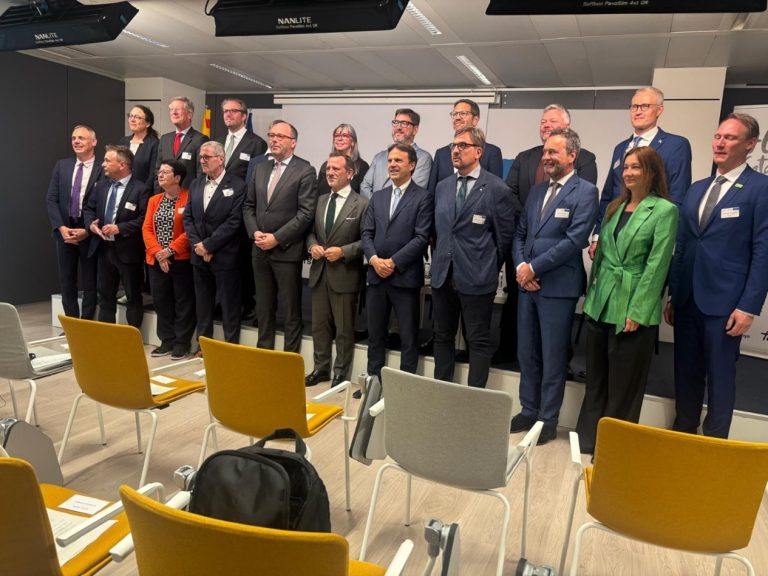
The timing of Business Tampere’s study proved particularly opportune, as the European Commission published its proposal for Chips Act 2.0 in early June. Spinverse had the opportunity to present the study’s preliminary findings to a European audience on 10 June at an event organised by the EU Offices of Tampere region, Saxony, and North Rhine-Westphalia, focusing on the role of semiconductors in the defence and space industries. During the same event, representatives of the European Commission provided stakeholders with a more detailed presentation of the Chips Act 2.0 proposal that had been released the previous week.
The European Commission’s proposal explicitly recognizes the defence industry as one of the critical application areas for semiconductors. The proposal includes measures aimed at stimulating demand, among other objectives, but many of the details still require further clarification. The coming autumn will provide a key window of opportunity to influence the final shape of the legislation, and the study commissioned by Business Tampere offers valuable background information to support the ongoing negotiations.
Petri Räsänen, Director of the Chips from Tampere Programme, emphasizes the importance of effective cross-sector collaboration in achieving Europe’s strategic objectives. “Europe’s strategic autonomy requires new investments in semiconductors, as well as stronger cooperation between the defence, technology, and semiconductor industries. The Chips from Tampere programme aims to ensure that Finland and the Tampere region serve as an attractive platform for new investments and international partnerships,” Räsänen says.
Active work is already underway in the Tampere region as the forthcoming Chips Act advances through the legislative process in the European Parliament and among Member States. Well-established connections with the EU institutions and their key stakeholders provide a strong foundation for effective advocacy and influence. As Chair of the European Semiconductor Regions Alliance (ESRA), Tampere region is in a strategic position to contribute to discussions on the detailed provisions of the upcoming legislation and to help shape policies that support Europe’s semiconductor ecosystem.
The key findings of the study conducted by Spinverse are available in the summary document provided below.