EU Inc. – Commission proposal
On March 18, the European Commission presented its EU Inc. proposal. The initiative has been described as the cornerstone and starting point of the EU’s 28th Regime. The EU Inc. initiative establishes common EU rules on company law. It is a voluntary, harmonized, and digital framework for businesses that would be available to all companies throughout the EU. EU Inc. includes measures that facilitate cross-border business while respecting European standards. In addition, the future 28th legal order would include simpler tax regulations, facilitate access to skilled labor, and ensure greater legal certainty.
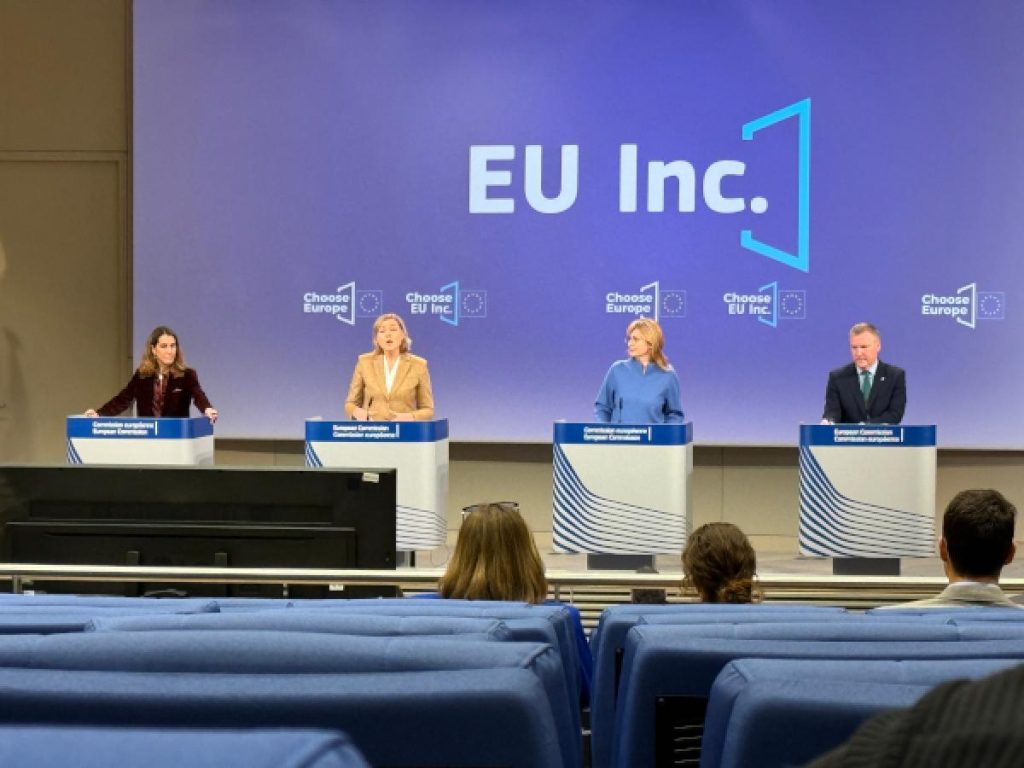
EU Inc. and the 28th Regime trace their origins to the Draghi Report, which emphasized the urgent need to focus on improving the EU’s competitiveness, including facilitating the expansion of innovative companies in Europe. The 28th Regime and the now-proposed EU Inc.-company are a central part of the EU’s Competitiveness Compass, and EU Inc. is one of the most important initiatives currently supporting startups and scaleups. Currently, the red tape stands in the way of entrepreneurs and innovative companies – the 27 Member States have their own legal orders, and there are over 60 different types of companies in the EU. EU Inc. will not replace national corporate structures, but it will offer a harmonized set of company law rules that companies can apply if they wish.
Europe produces 20% of the world’s scientific publications. There are also over 30,000 early-stage startups operating here, which, according to the Commission, is more than anywhere else. Still, over the past decade, more than 700 billion euros tech market value has flowed out of Europe, as companies repeatedly face challenges when seeking to expand their market reach, raise additional capital, or attract top talent; as a result, European companies have either been acquired by non-European firms or chosen to list elsewhere. European startup founders have been calling on the EU to remove market barriers.
Main features of EU Inc. are related to simplification, digitalisation and open Single Market. First, in the future entrepreneurs, founders, and companies can do a digital one-time registration faster (in 48 hours) and cheaper (maximum EUR 100) with no minimum share capital to EU Register. Companies will, for example, obtain their tax identification and VAT numbers without having to resubmit paperwork. The EU Inc. will enable full access to the Single Market because EU Inc. companies can freely choose the Member State in which they incorporate. EU Inc. companies should be treated the same way as any other national companies.
The EU Inc. also aims to create better conditions for attracting investment and talents. Proposal will remove in-person formalities, provide digital procedures for financing operations, and simplify the transfer of shares.

At the same time the European Commission is working with the Innovation Act, where it will urge Member States governments to procure more from startups. We are waiting for the Commission’s proposal with this act between April and June 2026. And the EU Inc. proposal will now be discussed by the European Parliament and the Council. The Commission will work on supporting the co-legislators, because the goal is to reach an agreement by the end of 2026.