Room for improvement in the EU’s Single Market and competitiveness – Commission reports on developments in 2025
The European Commission published its annual Single Market and Competitiveness Report. According to the Commission’s indicators, progress over the past year has been modest. The current geopolitical situation poses significant challenges to the EU’s competitiveness that can only be overcome if the single market functions effectively. The concept of outsourcing EU regulation through the internal market and trade agreements has given way to a shift towards deregulation in the EU.
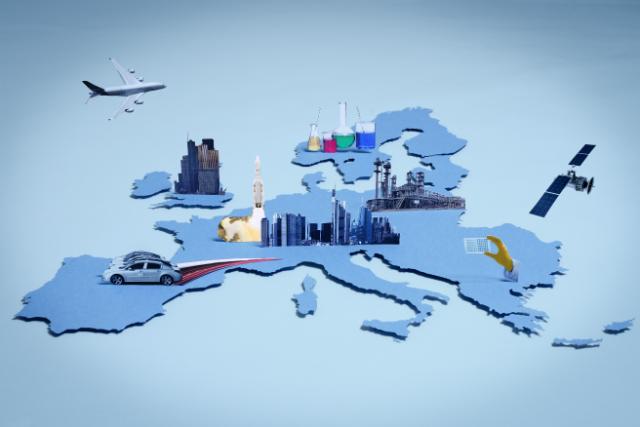
The European Union’s Single Market is one of its most significant achievements. However, major barriers still exist within the Single Market. Improvements are very much needed in the way the services sector operates, as trade barriers are estimated to be equivalent to 100% tariffs. At the end of January, the European Commission published its annual Single Market and Competitiveness Report. In the report, the Commission describes the state of the Union in relation to these issues.
The Commission notes that the EU’s competitiveness is facing an increasing number of challenges due to geopolitical changes and the decline of rules-based, international free trade. According to their report, a well functioning Single Market is the EU’s most important tool for tackling these challenges. Competitiveness strongly guides the current Commission’s activities.
The Commission uses 29 Key Performance Indicators (KPIs) to measure the EU’s success. KPIs focus on areas such as trade barriers, electricity prices, and the Union’s priority areas. According to the Commission’s assessment, six of these KPIs show positive results, six negative results, and the rest have remained mostly unchanged. The Commission notes progress in positive areas such as the recognition of skills between Member States and the use of AI among European companies. On the negative side, there has been a decline in PISA results for 15-year-olds. Over the past year the share of private investment in GDP has declined as has the share of trade between EU countries. Among other targets, the Commission aims to remove barriers to services related to green transition in 2026.
The importance of the EU Single Market is highlighted.
In order to increase competitiveness, ensure economic success, achieve technological self-sufficiency and ultimately become a globally significant player, Europe needs a functioning internal market. The EU has the second largest GDP of any economic area in the world, so acting as a unified market would give even more significant power.
In the Commission’s press release, Stéphane Séjourné, Executive Vice-President for Prosperity and Industrial Strategy states that the Single Market is not only Europe’s main source of prosperity, but also a central pillar of Europe’s power in today’s geopolitical context.
A decade ago, the concept of the Brussels effect emerged in the European Union. Thought suggested that the EU’s Single Market would be so attractive to other countries that the EU could effectively transfer its own regulations to other parts of the world by concluding trade agreements. It was believed, for instance, that European regulations on climate, environment, human rights and labour would be adopted by trading partner countries in order to have access to the EU Single Market. However, the Brussels effect has not turned out to be as effective or powerful as originally thought. In order to compete globally more effectively, Europe is now simplifying its own regulations and removing barriers to the Single Market.
You can read the full Single Market and Competitiveness Report here. The report is based on four pillars: the functioning Single Market; closing the innovation gap; decarbonisation of industry and investment; and increasing security and reducing dependencies.