
Get familiar with EU networks: ERRIN
This new article series presents the networks of the Tampere Region EU Office in Brussels. First in a row is ERRIN, European regions research and innovation network. ERRIN-network adds value by creating a bridge between EU policy and local innovation ecosystems. Tampere Region EU office has been a member for a long time, as the network has been growing during the years.
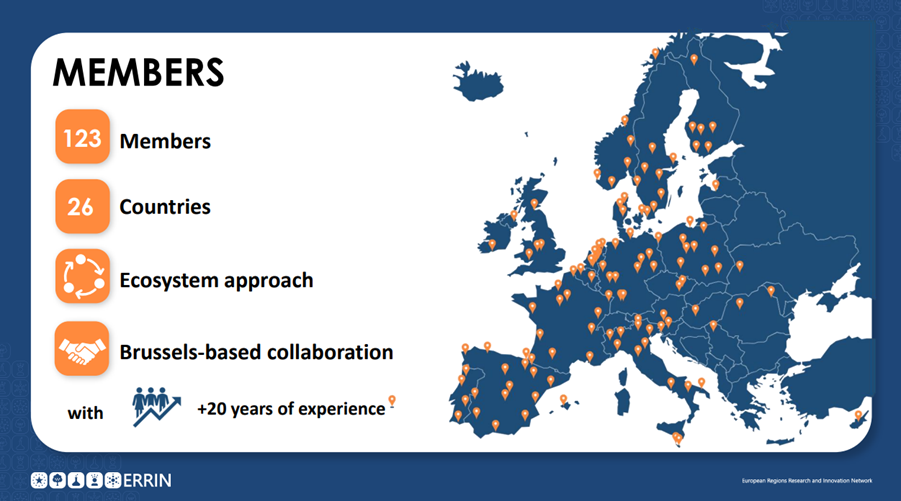
Network acts as a platform for dialogue and collaboration between cities, regions, universities and industry. ERRIN emphasizes the regional dimension in EU’s R&I policy ensuring that initiatives are designed with and for regions, rather than being imposed top-dow. As ERRIN’s top priority is to reinforce research and innovation ecosystems it also does a lot of advocacy work, for example with the next multiannual financial framewokr (e.g. National and Regional Partnership Plans, European Competitiveness Fund, Horizon Europe).
As a network ERRIN’s mission is to bring a place-based perspective to EU research and innovation policy and funding, make connections and facilitate EU engagement between member regions, EU institutions, and other partners and increase project opportunities for members.
ERRIN consists of 12 working groups and two task forces. 11 of them are thematic groups which follow Horizon Europe Pillar 2’s (Global Challenges and European Industrial Competitiveness) clusters. Three strategic working groups have their focus in policy and programmes and one is a strategic workstream focusing on Competitiveness.
Working groups are memeber-driven. Tampere Region EU-office is the co-lead in ERRIN’s ICT working group. Working groups mean co-operation, information sharing and added visibility to regions and themed topics. Conrete work in task forces includes influencing policy and exchanging information and local practices. They also support project development by finding partners, building consortiums and enabling access to information about funding opportunities.
In Tampere Region, one example of this work is the Circular Cities and Regions Initiative (CCRI), where ERRIN’s Bioeconomy working group acted as an information broker and provided support during the application process. Tampere Regions application was a success, as we were selected as one of twelve EU-pilot regions from among 125 applications.
You get to read more about CCRI from our next week’s newsletter! You can subscribe to our newsletter here.