Communication on EU’s eastern regions bordering Russia, Belarus and Ukraine
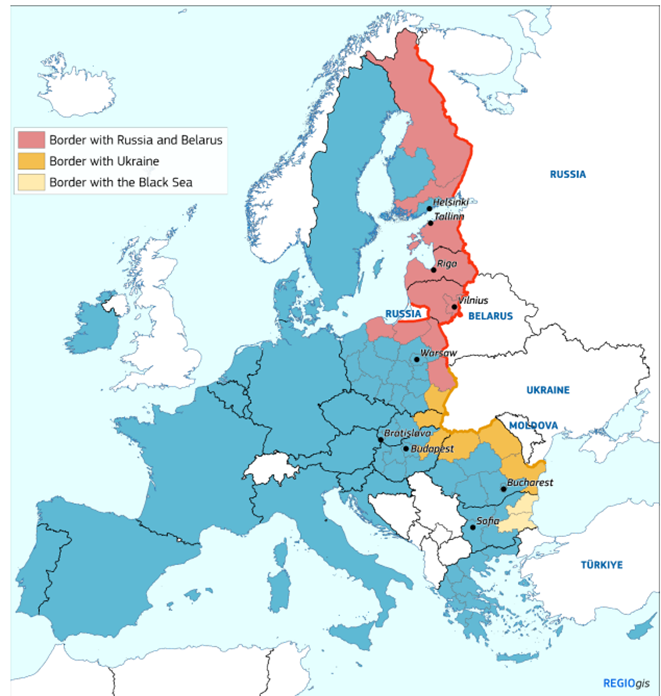
On February 18th, 2026, the European Commission published a Communication on EU’s eastern borders. The communication reaffirmed the Commission’s commitment to supporting these regions. The communication outlines five priorities: security and resilience, growth and regional prosperity, building on local strengths, connectivity, and supporting people. This initiative represents a strategic investment in Europe’s security, competitiveness, and future stability.
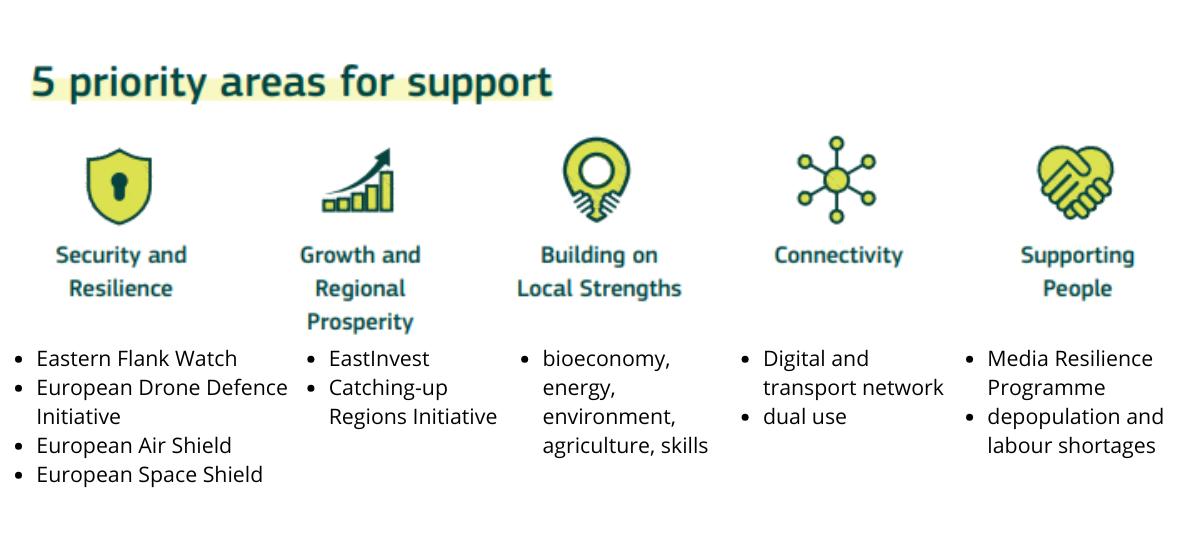
Hybrid warfare, disinformation, population decline, and economic disruption, such as reduced investment, declining freight traffic, and falling tourism, have posed significant challenges for the easternmost regions of the Union. The Commission considers the impact is particularly acute in nine Member States: Finland, Estonia, Latvia, Lithuania, Poland, Slovakia, Hungary, Romania, and Bulgaria. The Commission defines the eastern border regions at the so-called NUTS 2 level (see the picture). Finland has five NUTS 2 areas. Tampere Region is not included in these eastern border regions, because it belongs to the Western Finland’s Large area.
The communication does not promise new funding for the regions during the current funding period. It intends to support the regions using existing EU funding instruments. For the next multiannual financial framework (MFF 2028-2024) the Commission has proposed increased funding for defense and security themes, as well as the allocation of funds to eastern border regions via national and regional partnership plans (NRPP).
One key areas of this Communication is to boost growth and regional prosperity by attracting investments. To achieve this, the Commission is launching a new EastInvest-investment instrument, which aims to mobilize at least €28 billion investments in border regions in years 2026–2027. Implemented in cooperation with the European Investment Bank and other international and regional banks, EastInvest will include support measures related to access to loans and advisory services. Additionally, the Catching-up Regions initiative will strengthen support for these regions. This initiative provides regions with expert support for project development, strengthening business activities, and developing the knowledge base.
The Commission aims to enhance border security through existing flagship projects Eastern Flank Watch, the European Drone Defence, European Air Shield and the European Space Shield. Local strengths, such as the circular and bioeconomy, agriculture and forestry, the green transition, and expertise, will be leveraged. Identifying regional strengths also involves supporting the Nordic-Baltic hydrogen corridor. Digital connections and transport networks in border areas will be improved. The EU is also directing funds towards combating disinformation and strengthening communities, for example through the Media Resilience Programme. The communication also aims to address population decline and labor shortages.
The Commission will launch annual, high-level political dialogues to monitor progress on the plans. The first event will take place on February 26th this week. Financial institutions are expected to sign a statement on the launch of EastInvest.